
A gluten and shrimp allergy, a daughter obsessed with convenience stores, and one of the best trips of my life.
On our last night in Korea, in the lounge at Incheon Airport, I made myself what anyone would call a very sad salad.
Around me, people were tucking into fried chicken and steaming bowls of soup, the kind of food you'd fly across the world for. My husband and daughter were happily working their way through the buffet. And I sat there with my leaves and my protein and my very careful choices, and I realised something that surprised me.
I was happy. Not putting on a brave face, happy. Genuinely content. I remember thinking: this is the way it's meant to be for me, and this is how I work around it.
That feeling is the reason I'm writing this. Because I didn't go to Seoul for the food. I went for everything else. And I came home convinced that how you eat on a trip has far less to do with what's on the menu than with how well you know yourself.
Why Korea is complicated when you can't eat gluten or shrimp
I have a gluten allergy and a shrimp allergy. In most countries, that's an inconvenience. In Korea, it's a strategy.
So much of Korean cooking is built on ingredients I can't have. Soy sauce is usually brewed with wheat. Gochujang, the beloved red chilli paste, often contains wheat or barley. Many kimchi recipes use salted fermented shrimp. Broths, marinades, and dipping sauces can carry either one quietly in the background. The flavours I'd have loved to explore were, for the most part, off the table before I'd even booked the flights.
I knew that going in. I made peace with it before we left. And I think that's the first lesson worth sharing: decide what the trip is for before you arrive. For some people, it's the food. For me, this time, it was the city, my family, and the feeling of being somewhere completely new. Once I'd decided that, I stopped grieving the menu and started enjoying the trip.
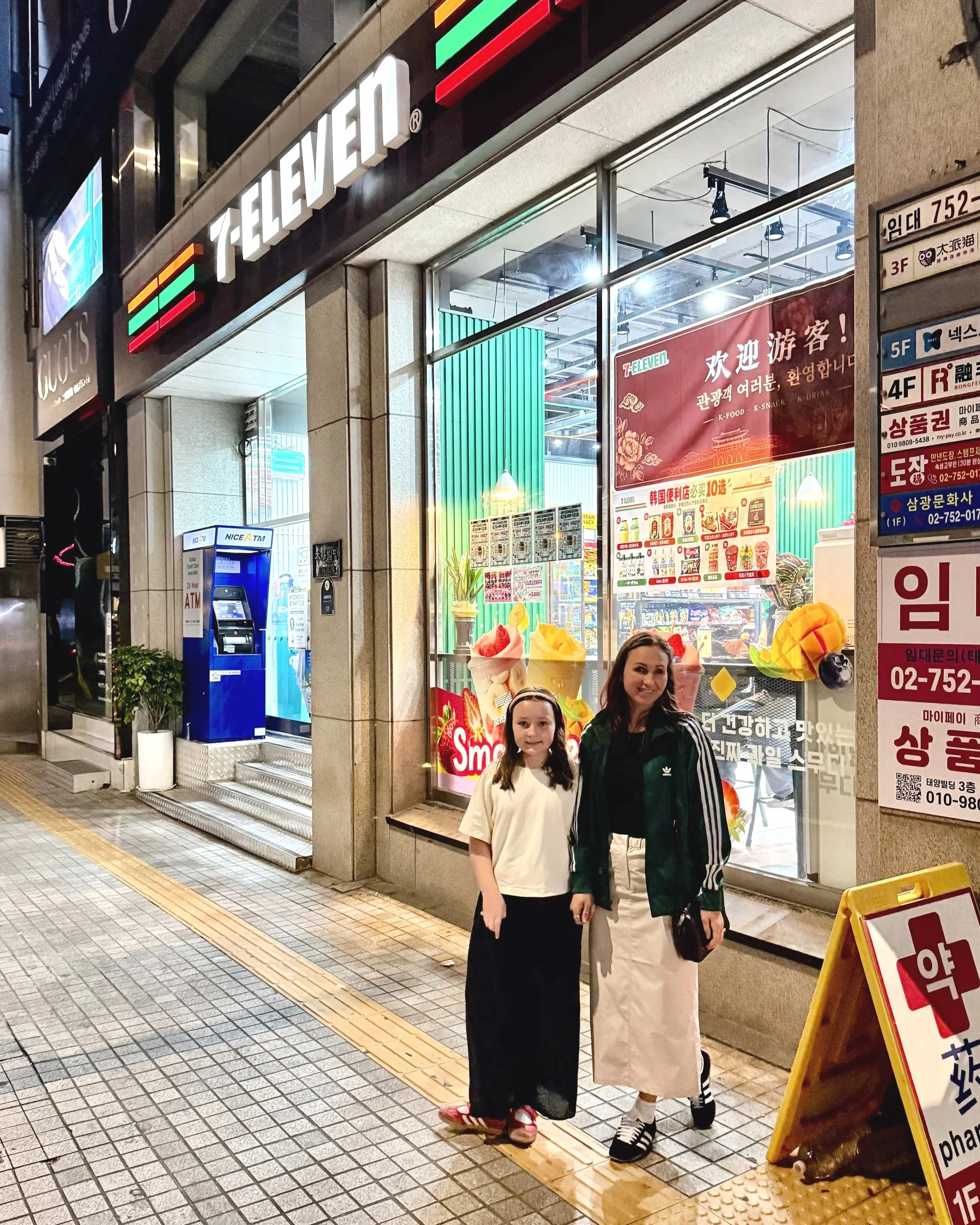
3 a.m. at the GS25 or 7-11
Jet lag does strange things to a family. On one of our first nights in Seoul, my daughter Siena and I were wide awake at 3 a.m. My husband, Brent, was fast asleep. Seoul is one of those cities where you can wander out in the middle of the night and feel completely safe, so the two of us slipped out to find a convenience store. In Korea, there's always one open.
We found a GS25, and I finally tried the viral drink I'd been seeing everywhere: hazelnut coffee mixed with banana milk. Then I spotted protein banana milk on the shelf, and that was it. I made my own version right there in the aisle, and it was so good I'm already working out how to recreate it at home. Stay tuned.
And then there was the smell. Korean bakeries are something else. From early morning onwards, the streets smelled of butter and warm bread, particularly the famous salt bread, crisp outside and soft within. I couldn't eat a bite of it. But I made sure Brent and Siena did, and I loved watching them.
That's something nobody tells you about eating with restrictions. Some of the most generous eating you'll do on a trip is watching the people you love enjoy something wonderful.
A love letter to the Korean convenience store
Siena is obsessed with Japanese and Korean convenience stores. Not mildly interested. Obsessed. She will walk into one at every opportunity, even if there's one on every corner, and in Seoul, there usually is.
I've come to see her point. A Korean convenience store is one of the most useful places in the world for a traveller who cares about how they feel. Between the two of us, we leaned heavily into the staples: hard-boiled eggs, cheese sticks, and tuna triangle kimbap. They're portable, filling, and available at any hour, and they kept me from ever arriving at a meal ravenous.
If you travel with allergies, one note of caution. Recipes and ingredients vary from product to product and shop to shop, so check labels every single time, and ask when you're not sure. A translation app with a camera function is your best friend here.
I'd put a Seoul convenience store up against most airport food courts any day.
The Indian restaurant rule
I have a slightly ridiculous travel tradition. In every country I visit, I end up at an Indian restaurant. And somehow, every single time, it's the best Indian food I've ever had. Seoul was no exception.
We also found conveyor belt sushi, which is our family's favourite way to eat when we're travelling. It's genuinely fun. Plates glide past, everyone grabs what looks good, and it's easy for me to choose things that work for my allergies. It turns dinner into a game, which, when you're travelling with a child, is half the battle.
And we ate Mexican food more than once, which might sound odd in Korea. It was phenomenal. That taught me something, too. Even when I couldn't eat Korean food, I was still eating food made by Korean cooks, and Korean cooks are damn good cooks. The care and precision in that kitchen came through in everything, whatever the cuisine.
Busan, and the perfect bowl
One of the best meals of the whole trip was a quick, cheap Mexican bowl in a little spot near Haeundae Beach in Busan.
It was inexpensive, it was one of the healthiest meals I've had in a long time, and the sauce was so good I'm still thinking about it. But what struck me most was the portion. It was perfect.
That matters because one thing I noticed throughout Korea is that portions are often massive. Generous, delicious, and enormous. If you're paying attention to how you feel, that's where your hunger cues have to do the work. Eat slowly, notice when you're comfortably satisfied, and give yourself permission to stop. You can always order more. You can't un-eat the third helping.
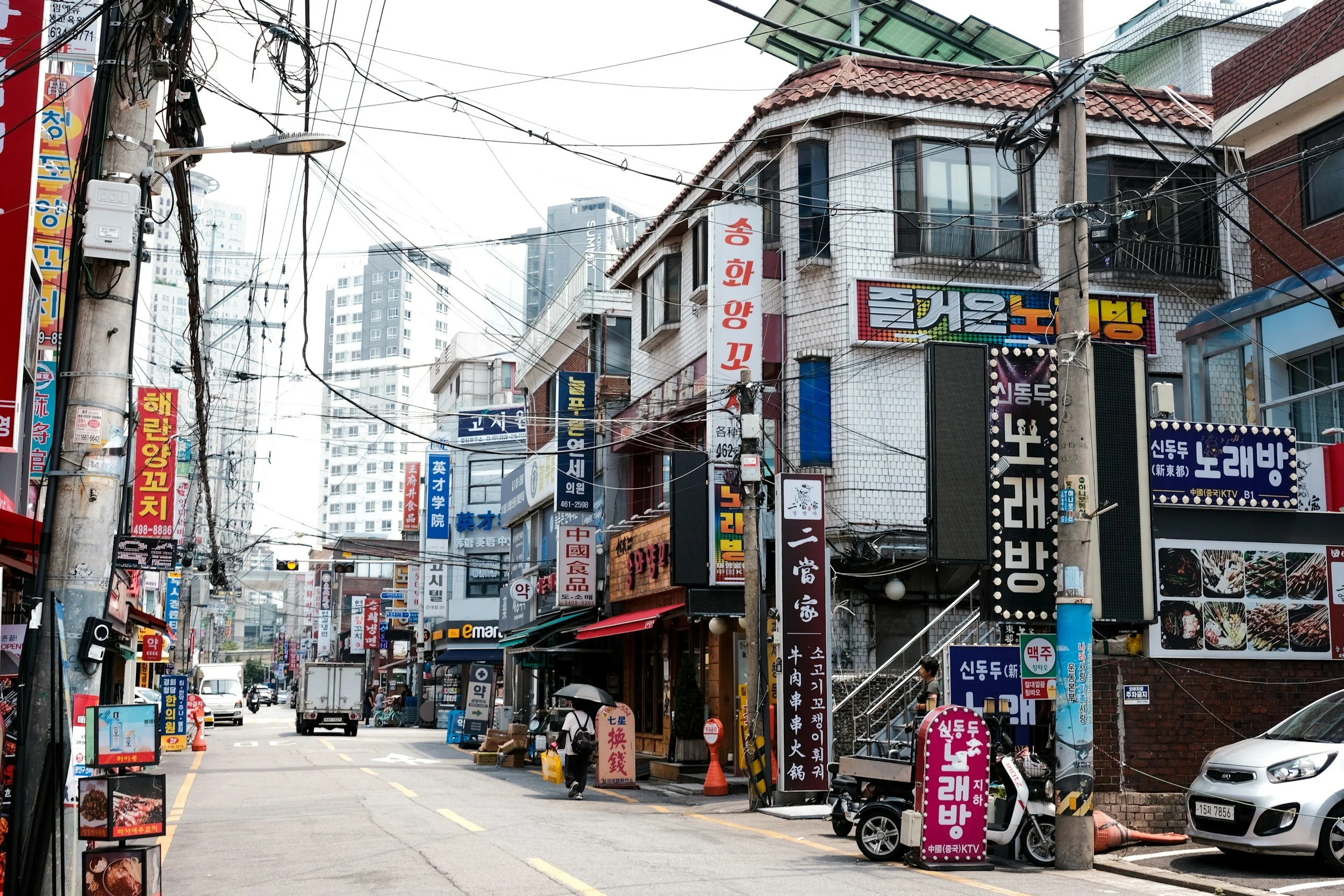
Seongsu, and twenty thousand steps
One of my favourite days was in Seongsu-dong, the Seoul neighbourhood of old factories turned into cafes, design shops, and pop-up stores. I love it there. It's the kind of place where every corner rewards you for walking a little further.
And we walked. On most days of this trip, we were doing somewhere between 17,000 and 20,000 steps.
I want to point that out, because it's one of the most underrated parts of travel. Exploring a city on foot is a movement you never have to schedule. No gym, no class, no plan. Just curiosity and comfortable shoes. Seoul's subway is immaculate, but the neighbourhoods are best on foot.
My secret weapon: the hotel lounge
This one is for my fellow points collectors.
We stay exclusively at Marriott Bonvoy properties, and as Platinum Elite members, we get lounge access and breakfast. In both Seoul and Busan, we stayed at Westin hotels, and with my allergies, that access was invaluable. We did a lot of lounge eating on this trip, and I'm not embarrassed to say it.
The lounges labelled the allergens on every dish. Even better, the team in Seoul remembered me. Every time I walked in, someone would say, "Amanda, you're allergic to gluten and shrimp. Do you need help with anything?" I can't tell you how much ease that gives you in a country where you can't read most of the labels.
Here's my practical tip: before every trip, I email the hotel concierge. I explain my allergies and ask for any restaurant suggestions or advice they have. It takes five minutes, and it means the hotel knows your needs before you've even checked in. If you travel with any dietary restrictions, I can't recommend it highly enough.
The rules I actually travel with
Years as a flight attendant taught me that the body is a logistics problem before it's an aesthetic one. Willpower is a terrible travel companion. It's always the first one to get jet lag. So I don't travel with willpower. I travel with a plan.
Never arrive starving. Carry something you can eat. Hunger makes every decision harder, and when you have allergies, it makes them riskier.
Do your homework before you fly. Email the concierge. Research the local cuisine and its hidden ingredients. Know where your safe options are.
Find your reliable spots. The Indian restaurant. The conveyor belt sushi. The convenience store eggs. Familiar options make the adventures easier.
Let your hunger cues lead, especially when portions are big.
Walk everywhere you can. It's the most enjoyable exercise you'll ever do.
No compensation when you get home. You don't pay for a trip with a week of punishment. Go home, eat your normal meals, and carry on.
What the sad salad taught me
Back to that lounge at Incheon. Back to my very sad salad.
Here's what I've come to believe. Wellness is not about eating everything. It's not about having no limits, no allergies, no preferences, no goals. It's about knowing your body well enough to work with it, wherever you are in the world.
And luxury, to me, isn't access to everything. It's knowing exactly what you need, and arranging the world so that you get it.
I didn't eat the fried chicken. I didn't try the soups or the salt bread. And I still came home from Korea with a full heart, tired legs, a new favourite neighbourhood, a 3 a.m. memory with my daughter that I'll keep forever, and a coffee recipe to perfect.
That, to me, is what a good trip looks like. And it's what I want nutrition to make possible: a life big enough to go anywhere, and a way of eating that comes with you.
If you want an approach to food that travels as well as you do, allergies and all, I'd love to work with you. At Amanda Normore Holistic Nutrition & Wellness, we start with your goals and the life they need to fit into. Explore working with me.
