
For busy lives, full calendars, and anyone who's ever stared into the fridge at 6 p.m.
I've spent a good part of my life living out of a suitcase.
Twenty years in aviation. Early mornings, late nights, different time zones. Hotel breakfasts, airport lunches, and dinners that didn't always happen at dinnertime. Some days, lunch was whatever I could find between one gate and the next.
Along the way, I learned the most important thing about eating well: it has to work in real life.
Not the version where you wake up refreshed, the fridge is perfectly stocked, and you somehow prepare three beautiful meals and still get everything else done.
I mean actual life. School drop-offs. Meetings that run late. Flights. Opening the fridge at 6 p.m. with no idea what to make. And yes, the night’s dinner is something you grabbed on the way home.
You can care about your health without making food the centre of your day. In fact, I'd argue that the people who eat well for years, not weeks, are the ones who have made it the least complicated part of their day.
When did eating get so complicated?
Protein targets. Meal timing. Supplements. Blood sugar. Calories. Food rules.
There's so much information out there that even people who love nutrition can feel overwhelmed. Open any app, and someone is telling you to eat more of something, while someone else is telling you to cut it out completely.
All of it has its place. Understanding protein matters. So does fibre, and how your meals keep your energy steady through the day. But when every bite becomes a decision, something interesting happens. Most of us don't eat better. We get tired. We give up by Wednesday and promise ourselves we'll start fresh on Monday.
That cycle isn't a willpower problem. It's a too-many-rules problem.
And somewhere in all that noise, I think we've lost sight of something simple.
Food is meant to nourish us. It's also meant to be enjoyed.
It's culture and connection. Family dinners. The little restaurant you found while travelling. The recipe you brought home because you couldn't stop thinking about it.
What Korea reminded me

I just got back from South Korea, and some of my favourite meals there were also the simplest.
My favourite? Tuna mayo gimbap from the convenience store. It was in every corner shop, it cost next to nothing, and it was perfect when I was on the run. I loved it so much that today I caught myself looking up a recipe to make it at home.
Think about what's actually in it: rice for energy, tuna for protein, a wrap of seaweed, and often a few vegetables tucked inside. It isn't trying to be a health food. It's simply a balanced, satisfying thing to eat that happens to be everywhere.
That was true of so much of what I ate there. Rice, vegetables, eggs, fish, soups, and beautifully seasoned side dishes, built on ingredients Koreans have eaten for generations. Meals often arrived with several small plates of vegetables, so eating your greens wasn't a project. It was just part of the table.
Nothing needed a superfood label. It was simply good food.
I wish more of us felt comfortable coming back to that. And it got me thinking about what easy, everyday convenience could look like at home, if we set ourselves up for it.
Four habits I come back to
When life gets busy, we don't need more rules. We need a few reliable habits. These are the four I lean on, and the ones I find myself teaching most often.
01 / build meals around something satisfying.
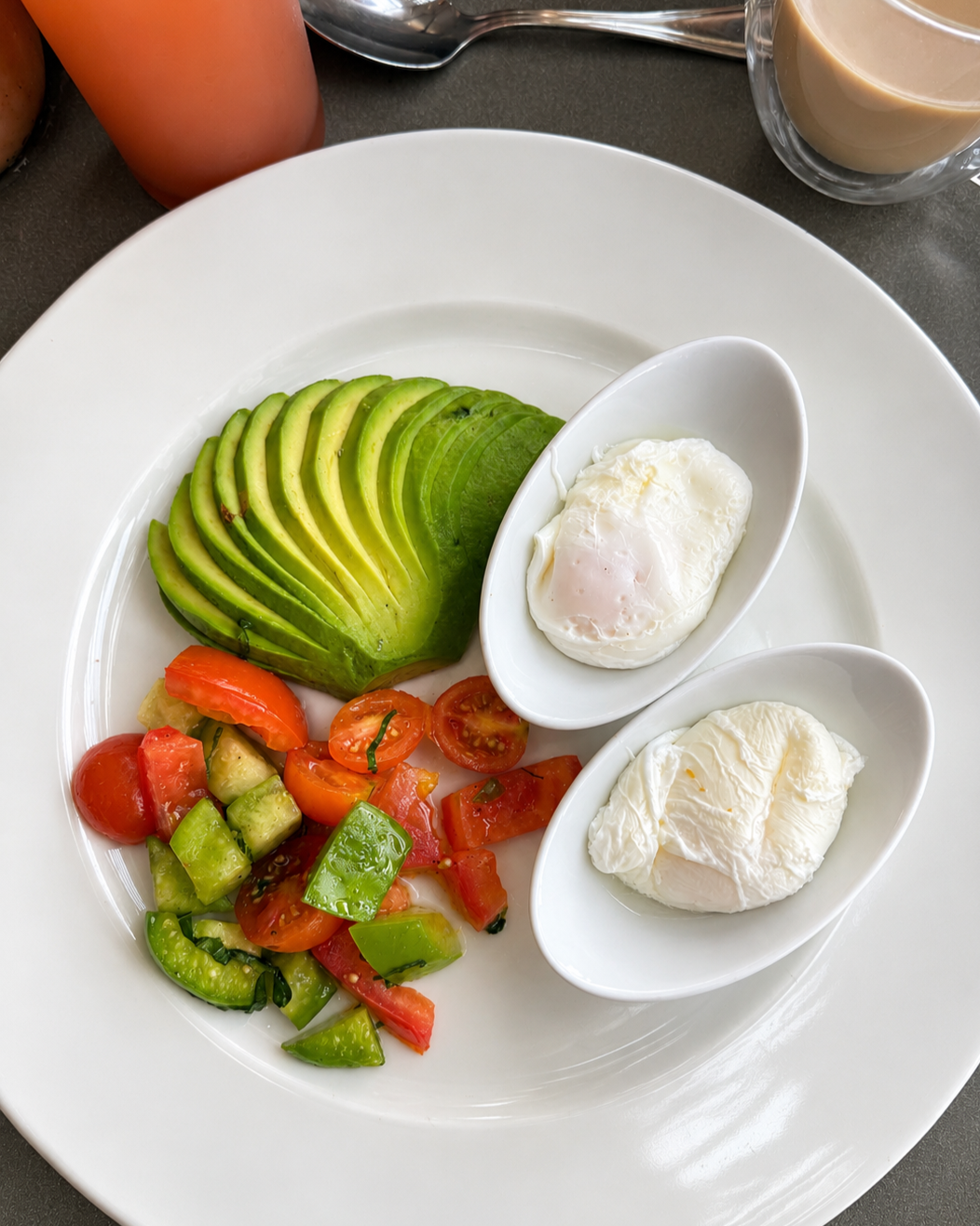
Protein, fibre-rich carbs, colourful vegetables, and some healthy fat. That's it. No scale, no app.
Think of it as a simple checklist, not a formula. Breakfast might be two poached eggs, sliced avocado, and a quick tomato-cucumber salad. Lunch could be a rotisserie chicken wrap with a handful of greens. Dinner might be salmon, rice, and whatever vegetables are in the freezer.
Protein is the piece I see missing most often, especially at breakfast and lunch. It helps keep you full, and it supports the muscle we all want to hold on to as we get older. If you start there and build around it, the rest of the plate tends to follow.
Not every meal has to be perfectly balanced. But keeping these four things in mind makes it far easier to put together something that keeps you full and energized, instead of reaching for a snack an hour later.
02 / keep a few meals on repeat.
You don't need a new recipe every day. Decision fatigue is real, and the fewer food decisions you have to make on a busy Tuesday, the better.
Try building a simple rotation: two or three breakfasts, two or three lunches, and four or five dinners you genuinely enjoy and can make without thinking. Write them down and keep the list on your fridge or in your phone. When you grocery shop, shop for that list. When you're tired, pick from it.
Repeat meals aren't boring when they're meals you love. And when you want something new, borrow flavours from a place you've travelled to or a cuisine you love. Swap the seasoning, not the whole system. Your weeknight stir-fry can be Korean-inspired one week and Thai-inspired the next.
03 / let convenience work for you.
Frozen vegetables. Tinned fish. Microwaveable rice. Prewashed greens. Rotisserie chicken. Greek yogurt. Hard-boiled eggs. Pre-cut fruit.
I love to cook, but I also love anything that gets a nourishing meal on the table faster. Convenient doesn't mean unhealthy. Frozen vegetables are often frozen soon after they're picked. A tin of salmon or tuna is one of the easiest proteins you can keep in the cupboard. A pouch of rice becomes the base of dinner in about two minutes.
A few staples worth keeping on hand:
a protein you don't have to cook (rotisserie chicken, tinned fish, eggs, Greek yogurt, cottage cheese)
a quick carb (microwaveable rice, wraps, good bread, potatoes)
vegetables that last more than two days (frozen veg, carrots, cucumbers, cherry tomatoes)
a few flavour-makers (a good sauce, salsa, pesto, soy sauce, chili crisp)
With those four things in the house, a decent dinner is never more than ten minutes away. Think of it as your at-home version of convenience store gimbap.
04 / leave room for living.
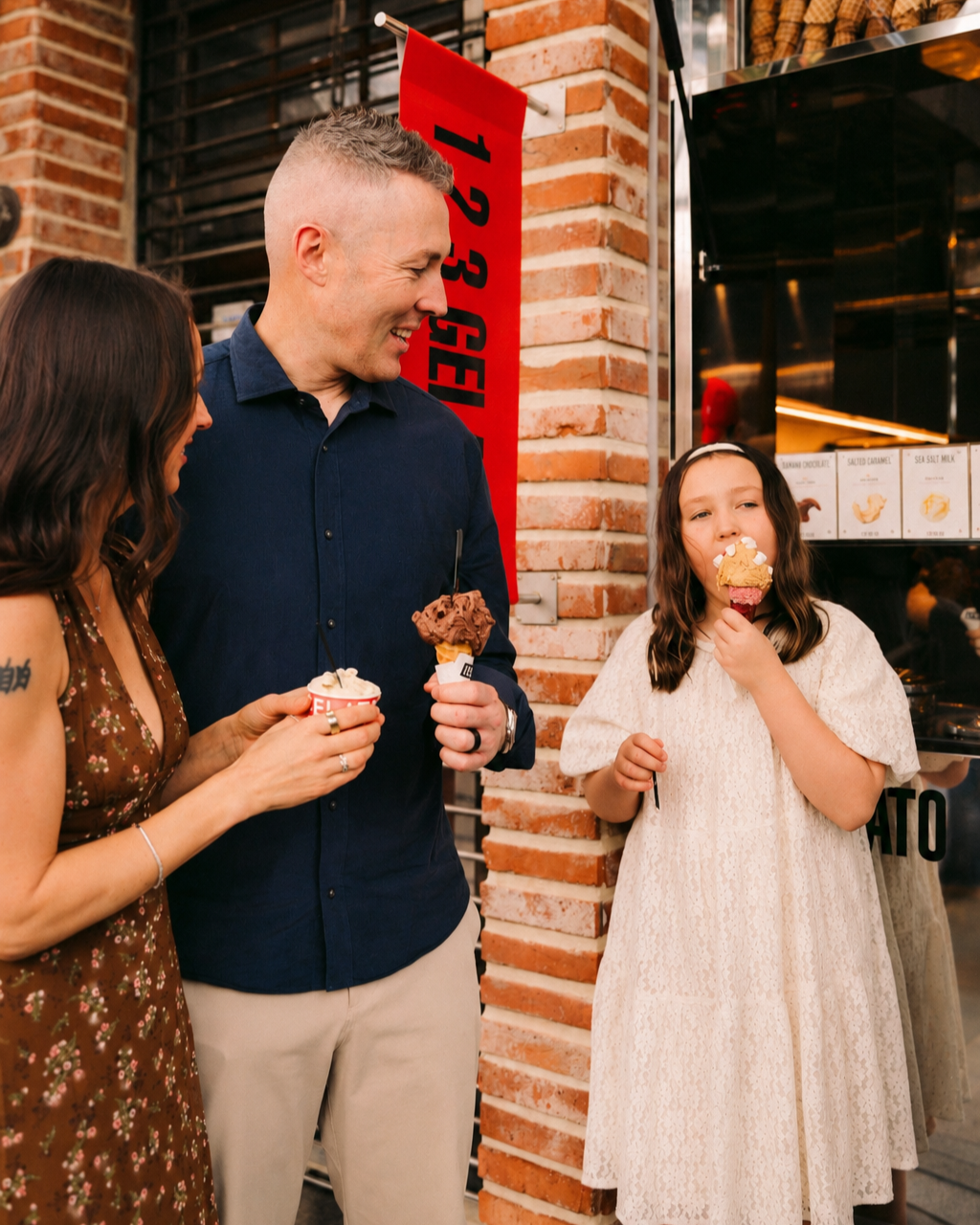
The birthday cake. The pasta in Italy. Gelato on a warm evening with the people you love. The spontaneous dinner with friends.
One meal doesn't define your health, just as one salad doesn't create it. What you do consistently matters far more.
This is the habit people struggle with most, because so many of us were taught to think of food as good or bad. Eat the cake, and the whole day is ruined. Have a big dinner out, and the week is off track.
But that isn't how health works. Your body responds to patterns, not single moments. If most of your meals are built around protein, vegetables, and real food, a scoop of gelato on holiday is just that: a scoop of gelato. Enjoy it, and go back to your normal routine at the next meal. No compensating, no starting over.
Eating well on the road
After so many years of travelling, this is the question I get asked most. Here's what works for the frequent travellers I coach:
Pack your protein. Protein bars, jerky, roasted chickpeas, or nut packs mean you're not relying on whatever the airport has at 9 p.m.
Bring an empty water bottle. Fill it after security and keep refilling. Flying is dehydrating, and thirst can easily feel like hunger or fatigue.
Make the hotel breakfast count. It's often your best protein opportunity of the day: eggs, yogurt, fruit, oatmeal.
Look for the simple stuff. Grocery and convenience stores often beat restaurants for quick, balanced options like yogurt, fruit, boiled eggs, and sandwiches with real protein. Korea proved this to me all over again.
Aim for good, not perfect. One or two solid meals a day while you're away is a win.
What hundreds of clients have taught me
As a nutrition coach, I've worked with busy professionals, performers, parents, frequent travellers, and people who simply want to feel better in their bodies.
One thing comes up again and again: most people already know a lot about healthy eating. What they struggle with is doing it consistently.
Often, the fix is smaller than they expect. Someone who's starving by 4 p.m. usually needs more protein at breakfast and lunch, not more willpower in the afternoon. Someone who eats well all day and then falls apart at night is often simply not eating enough earlier on. And someone who feels like they're always starting over usually needs fewer rules, not stricter ones.
Other times, it's finding a way to eat that doesn't require spending Sunday afternoon filling 21 containers. Meal prep works beautifully for some people. For others, it's one more chore that falls apart by Wednesday. Both are fine. The best plan is the one you'll actually follow.
There's no one perfect routine. There shouldn't have to be.
A little less perfection, a little more living
I want to feel strong, energetic, and healthy as I get older. I want to look after my heart, my muscles, and my bones. For most of us, that comes down to a few unglamorous basics done consistently: enough protein, plenty of plants and fibre, moving our bodies, and decent sleep.
But I also want to travel, discover restaurants, and sit around a table with people I love without calculating everything on my plate.
I think we can have both. That's where eating well starts to feel easier: when your habits are flexible enough to come along for the life you're actually living. Not the imaginary one where everything goes according to plan.
Here's to good food, busy lives, and making room for both.
Amanda x
Try this week: pick three meals you already like and make them your repeat meals for the week. Notice how much easier it feels.
If this was helpful, share it with a friend who's always on the go.
P.S. Next week, I will share my at-home version of the gimbap I couldn't stop eating on Instagram.
work with me
If you'd like a more personal approach, I work one-on-one with people who want to improve their health, body composition and relationship with food, in a way that fits their real life. Explore coaching.
